TEFAF Maastricht
Introduction + Context
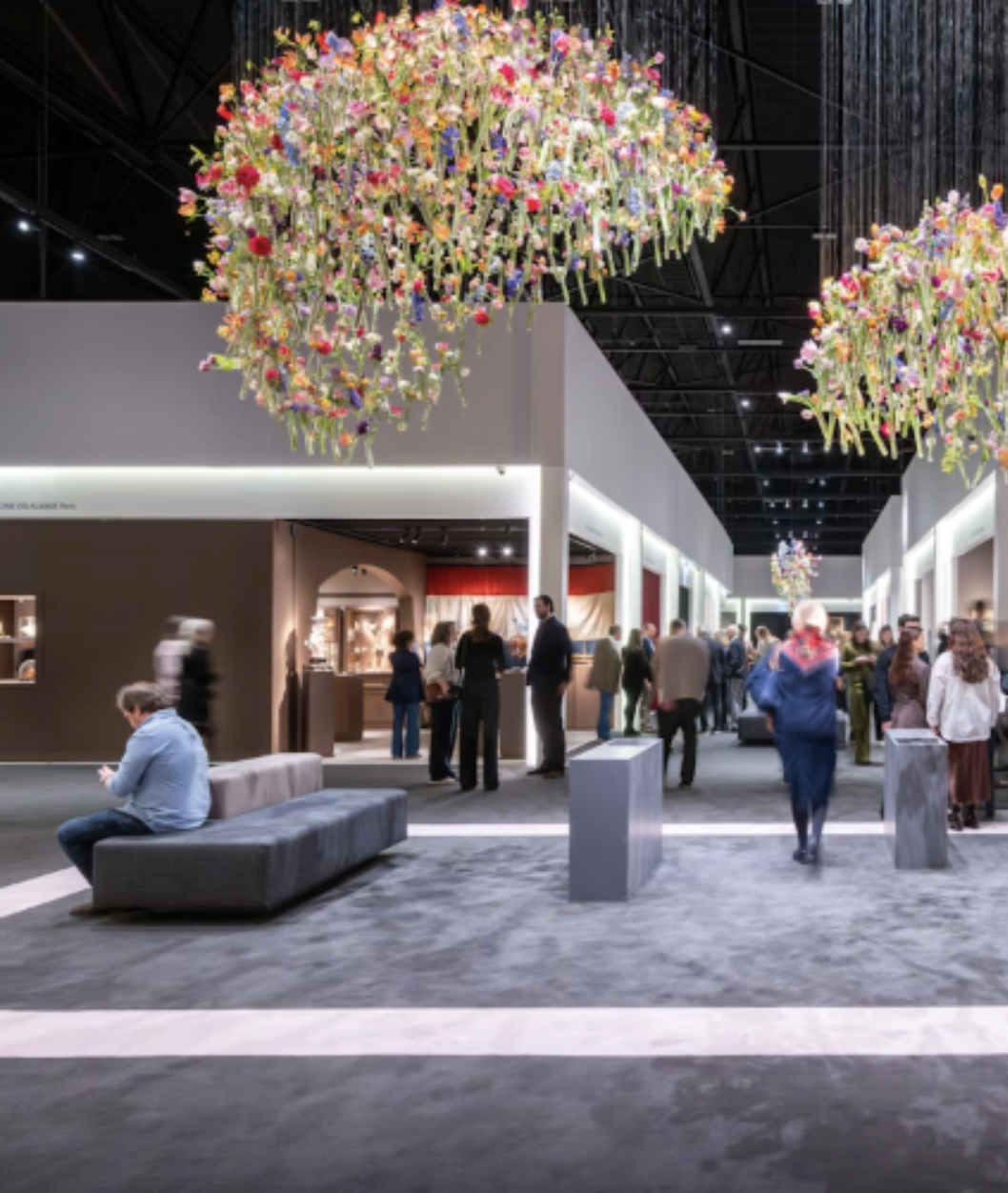
TEFAF Maastricht is an elite, bustling art fair, most known for its emphasis on historical works dating as far back as 7,000 years. The fair attracts about 50,000 visitors each year, comprising serious collectors, museum curators, celebrities, and non-collecting art enthusiasts.
Sprint Plan
The goal of this sprint was to generate and prototype a potential solution to the challenge of engaging art enthusiasts at TEFAF, while gallerists are busy prioritizing sales.
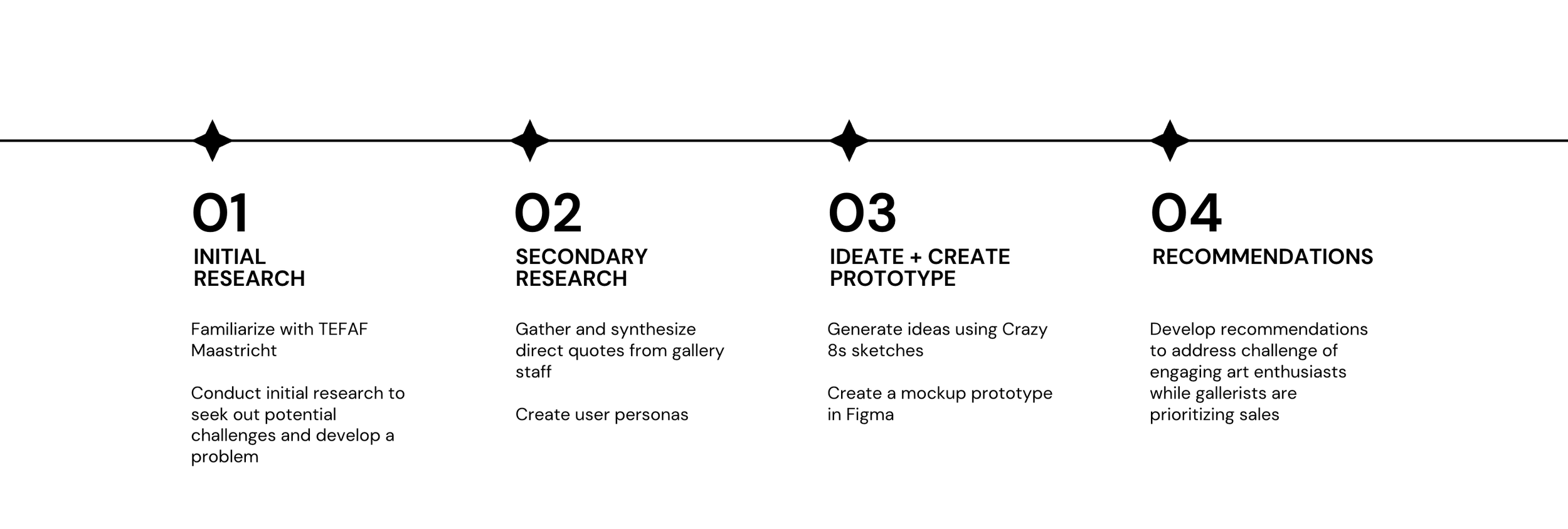
Discovery Phase
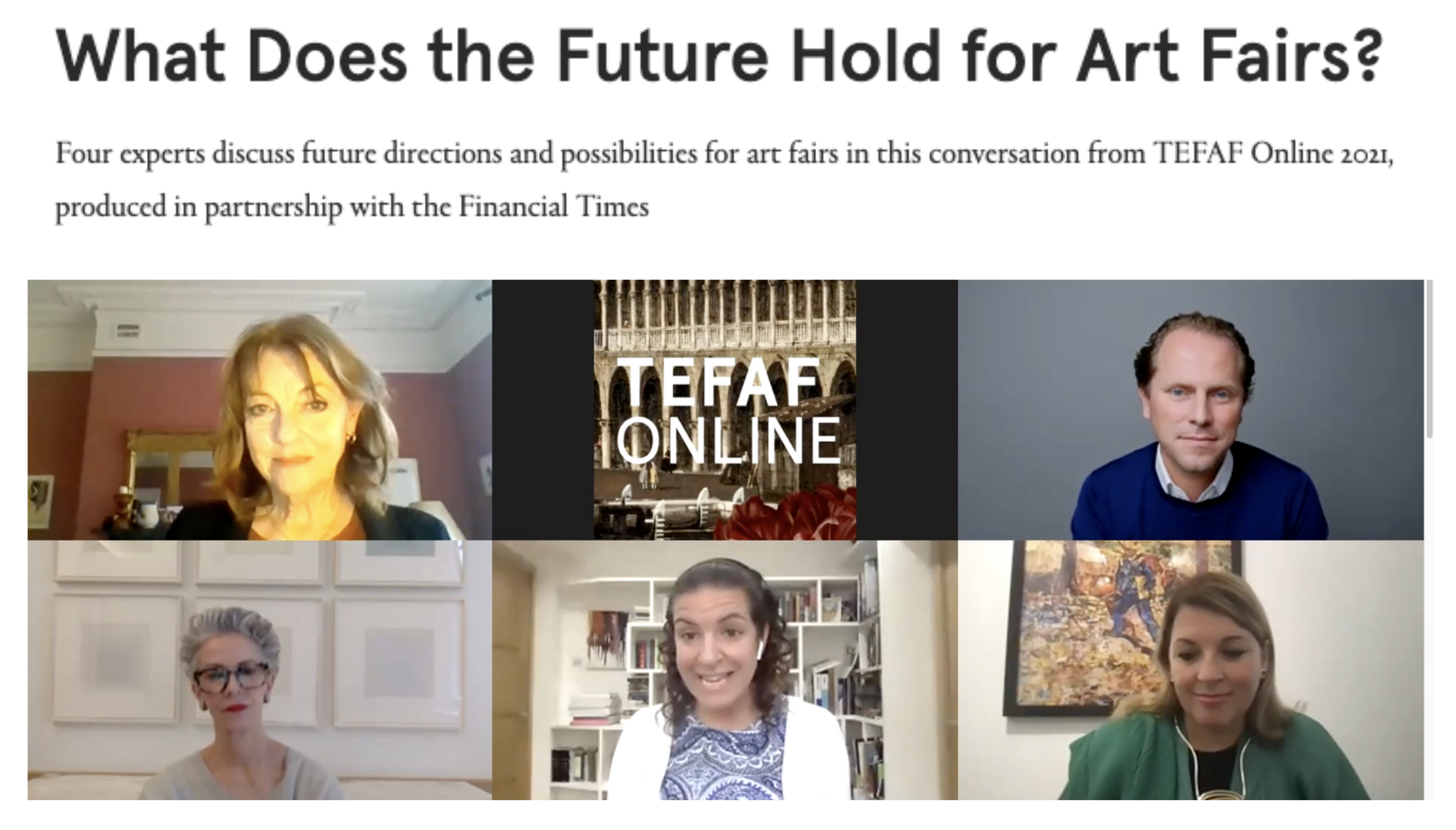
I started this project by learning more about TEFAF and art fairs in general, in order to narrow down some potential pain points to address. I came across a video presented by TEFAF that featured four experts (collectors, a gallerist, and a journalist/art market expert) discussing the future of art fairs. This provided a wealth of information directly from prominent individuals with direct experience at TEFAF Maastricht.
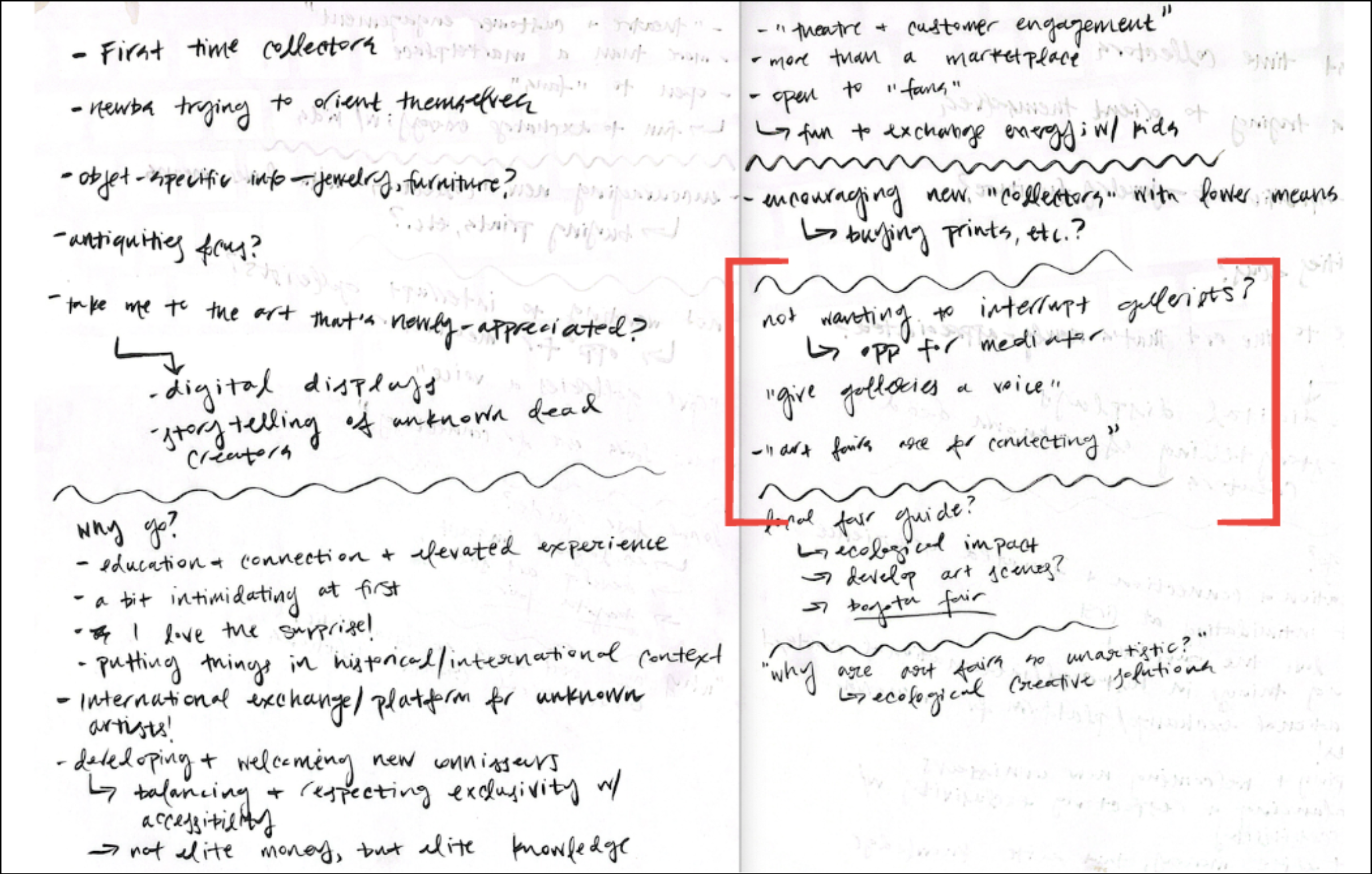
I took notes on the hour long discussion, and found 3 themes for pain points to address:
1.Beginning collectors have smaller budgets, and are priced out of a great deal of the works on display (or that’s their assumption).
2. Art enthusiasts (non-collectors) aren’t able to contribute financially to the fair/its galleries.
3. Gallery staff need to prioritize conversations with attendees who are serious about making a purchase.
I settled on the need for gallery staff to focus on customers who are serious about making purchases, because I saw potential to solve two challenges with one solution– freeing up gallery staff’s time and occupying art enthusiasts with something educational.
Problem Statement
At high-caliber art fairs like TEFAF, gallerists must prioritize scarce face-to-face time with serious buyers, yet many visitors are casual enthusiasts seeking education and enrichment. These non-buyers can unintentionally monopolize booth staff and block access for potential collectors, especially during peak sales windows.
This creates a dual challenge: protecting gallerists’ selling time while still delivering a world-class, educational experience that benefits TEFAF’s reputation.
Secondary Research
Without easy access to interview art fair gallery staff or high-level artists, I decided to conductsecondary research by pulling quotes from articles and online forums, which provided support for my initial assumptions about the needs of staff and visitors.
Direct Quotes From Artists/Gallery Staff
“I like to get to know customers better but chatting for long periods of time with the artist can pull them away from other potential sales and patrons. Be aware the artist has a limited time during the show to make contact and may not be able to make connections with others again for one or two years.”
“Beware the lovely people who you have great talks with but who have no intention of buying.They're lovely connecting human moments butnot sales.”
“Unless you're serious about buying something, leave the booth staff alone for the first day.”
“Sales are at their most intense in the first few hours of fair's opening, as galleries try to capitalize on the fast-paced nature of the event and pressure buyers into quick sales.”
Key Insights from Research
1. Gallerists value educational engagement, but not at the cost of sales.
There’s a recognized need for mediators or self-service educational tools so non-buyers can get information without interrupting sales conversations.
2. Non-buying visitors can unintentionally monopolize time.
Long chats, even friendly ones, can prevent gallerists from connecting with potential buyers.
3. Peak sales windows are critical.
Opening hours and early days of a fair are the most intense for sales, and interruptions during these times are especially costly.
4. Some non-buyers are self-aware, others are not.
While many visitors respect booth dynamics, others may linger, chat, or even take calls inside, which disrupts flow.
5. Dealers enjoy meaningful conversations, but only when they’re not
interfering with transactions.
Thoughtful interaction is welcome when it doesn’t compete with active sales opportunities.
Personas
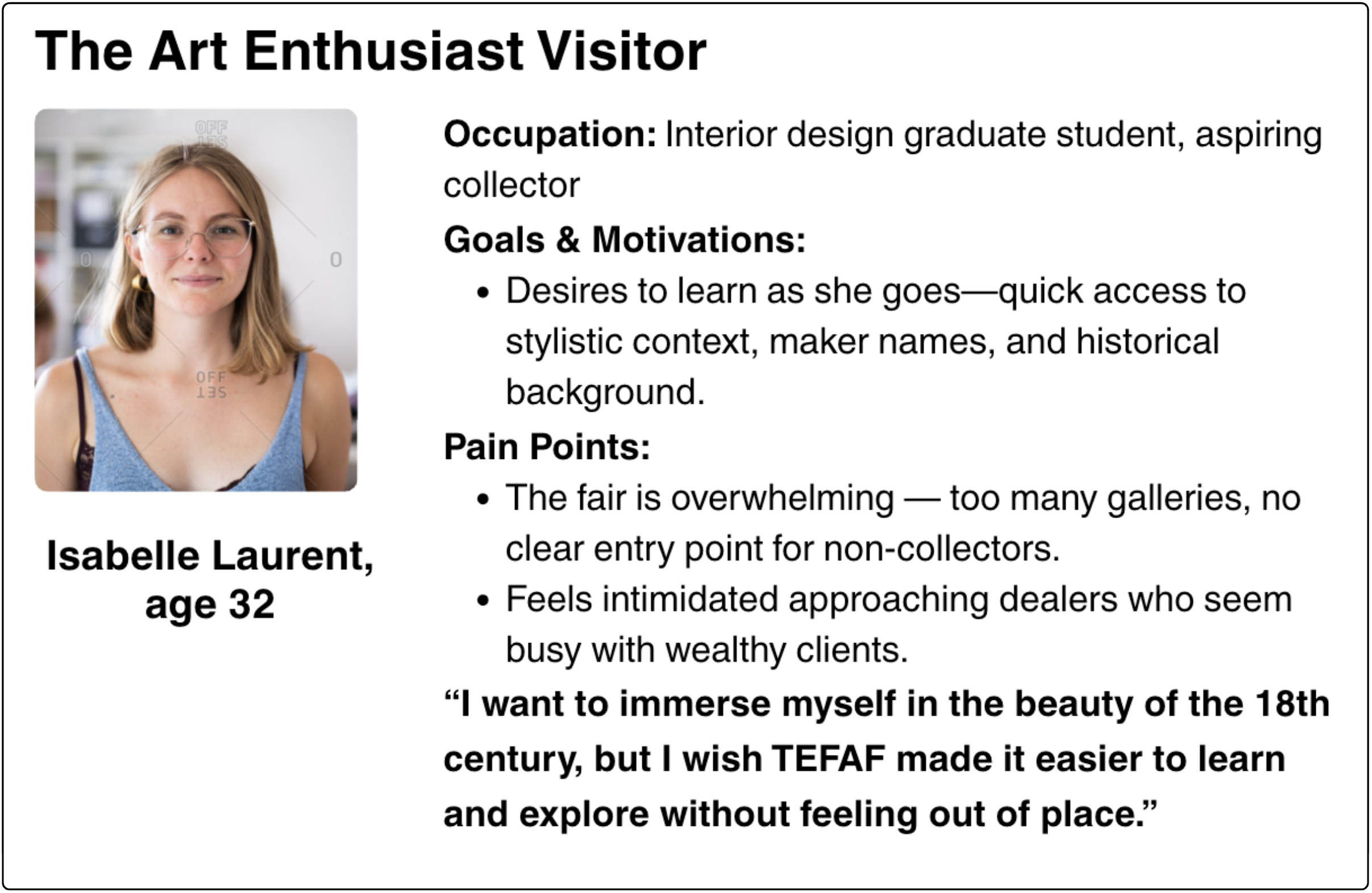
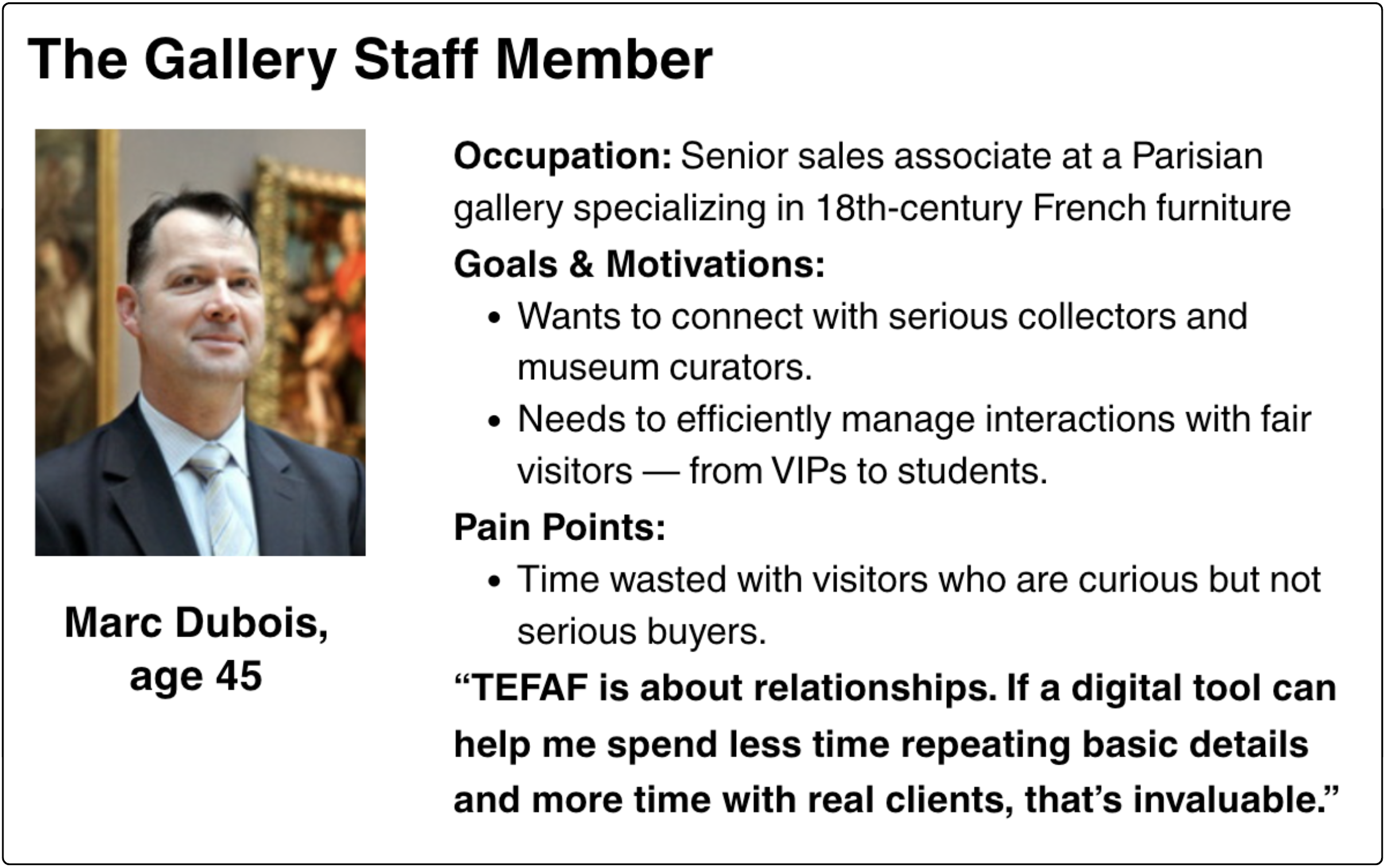
I developed two user personas for the two pain points I would address:
Proposed Solution
Drawing upon my research and empathy exercises, I came up with a potential solution to my problem:
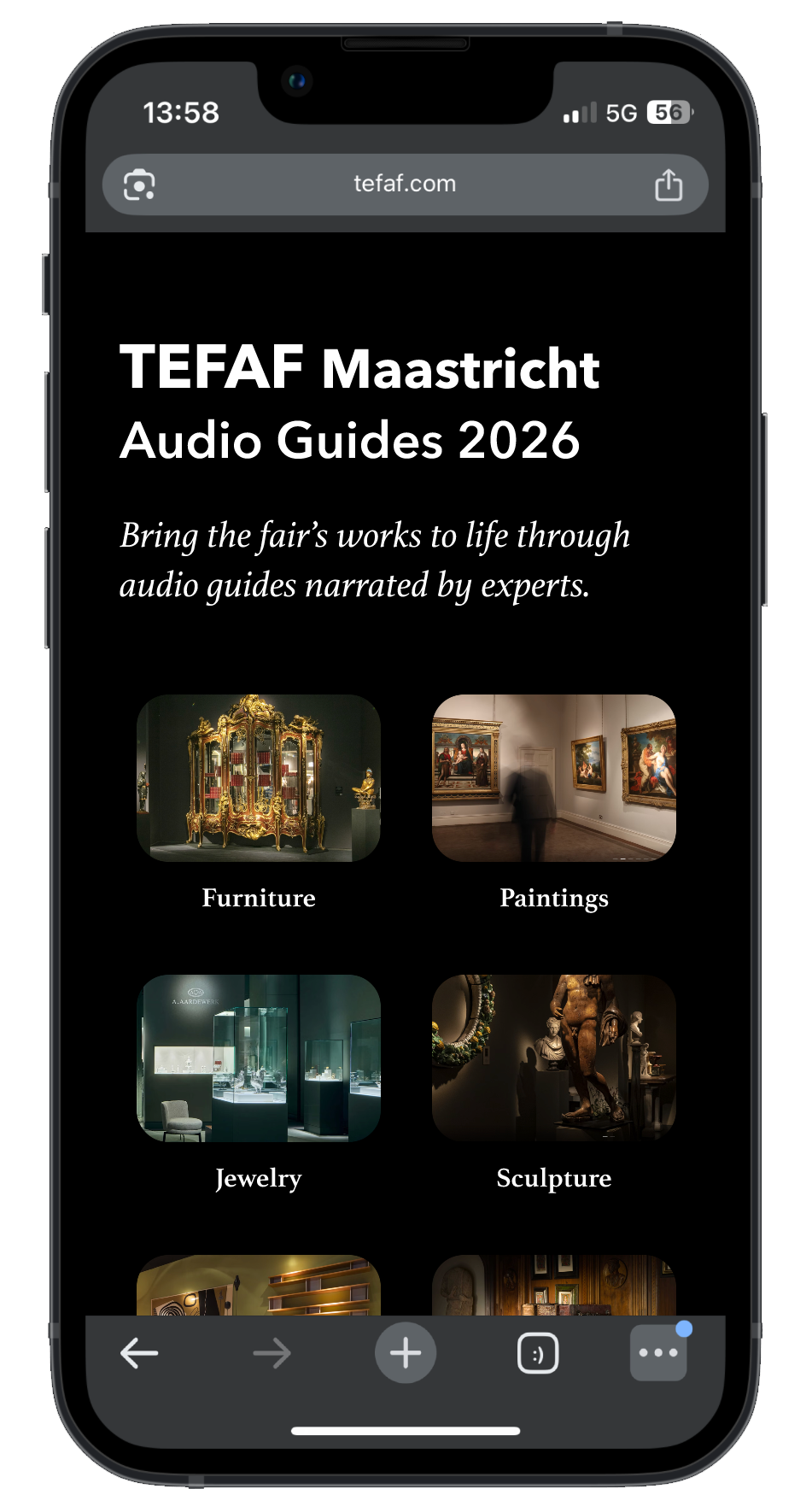
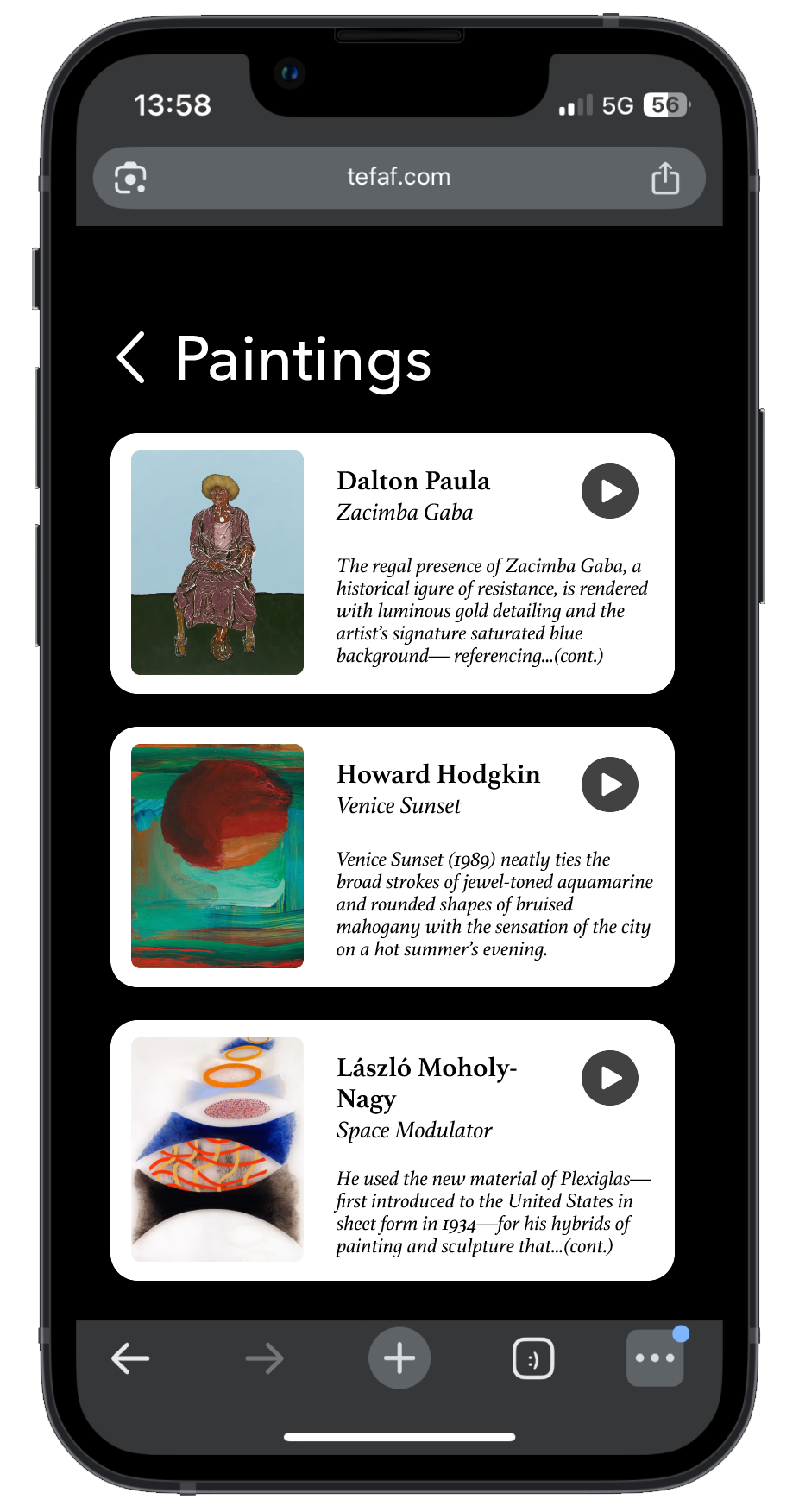
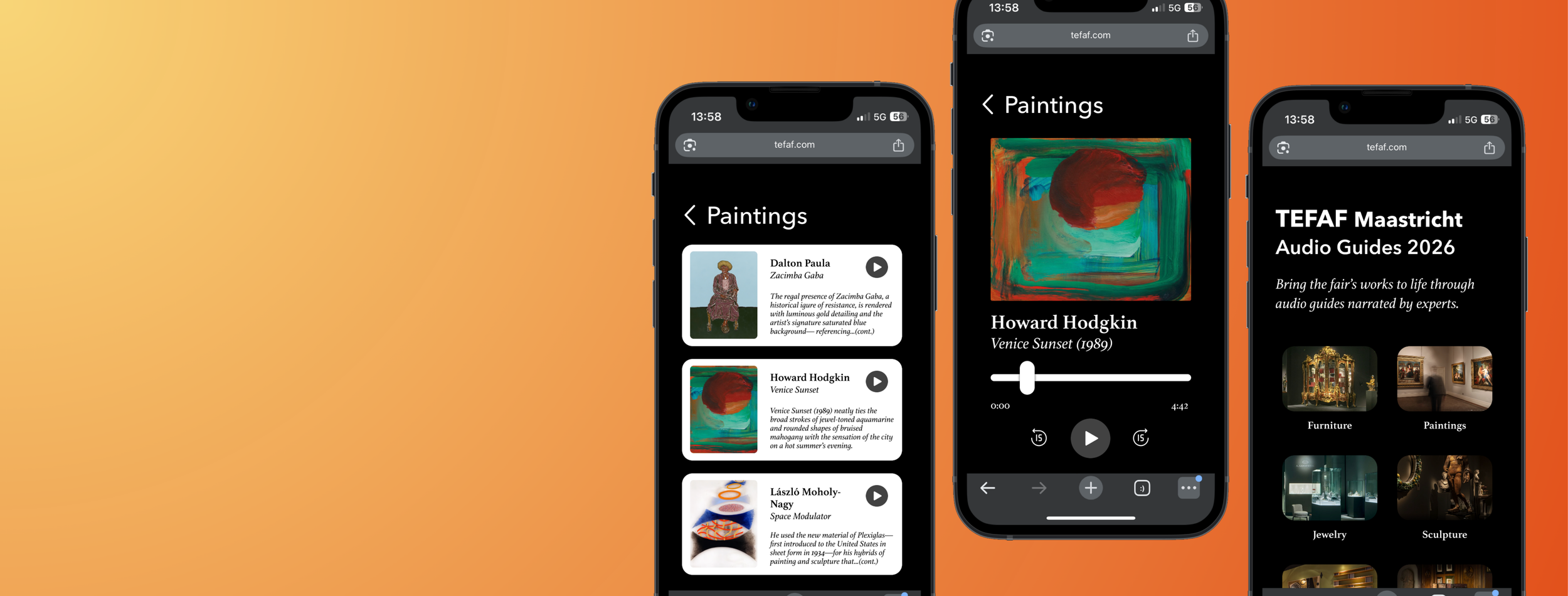
An audio guide companion website that fair attendees could use to learn about works of art, especially while gallery staff are occupied with potential buyers.
Pain points addressed:
Gallery staff being distracted by non-buying fair attendees
Art enthusiasts’ questions going unanswered by busy staff
Gains:
Gallery staff can prioritize making sales, which is their primary reason for being at TEFAF
Non-buying visitors can still feel connected to the experience even if staff are too busy to talk
Opportunity is still there for staff and visitors to interact, if the booth isn’t too busy
Rapid Ideation
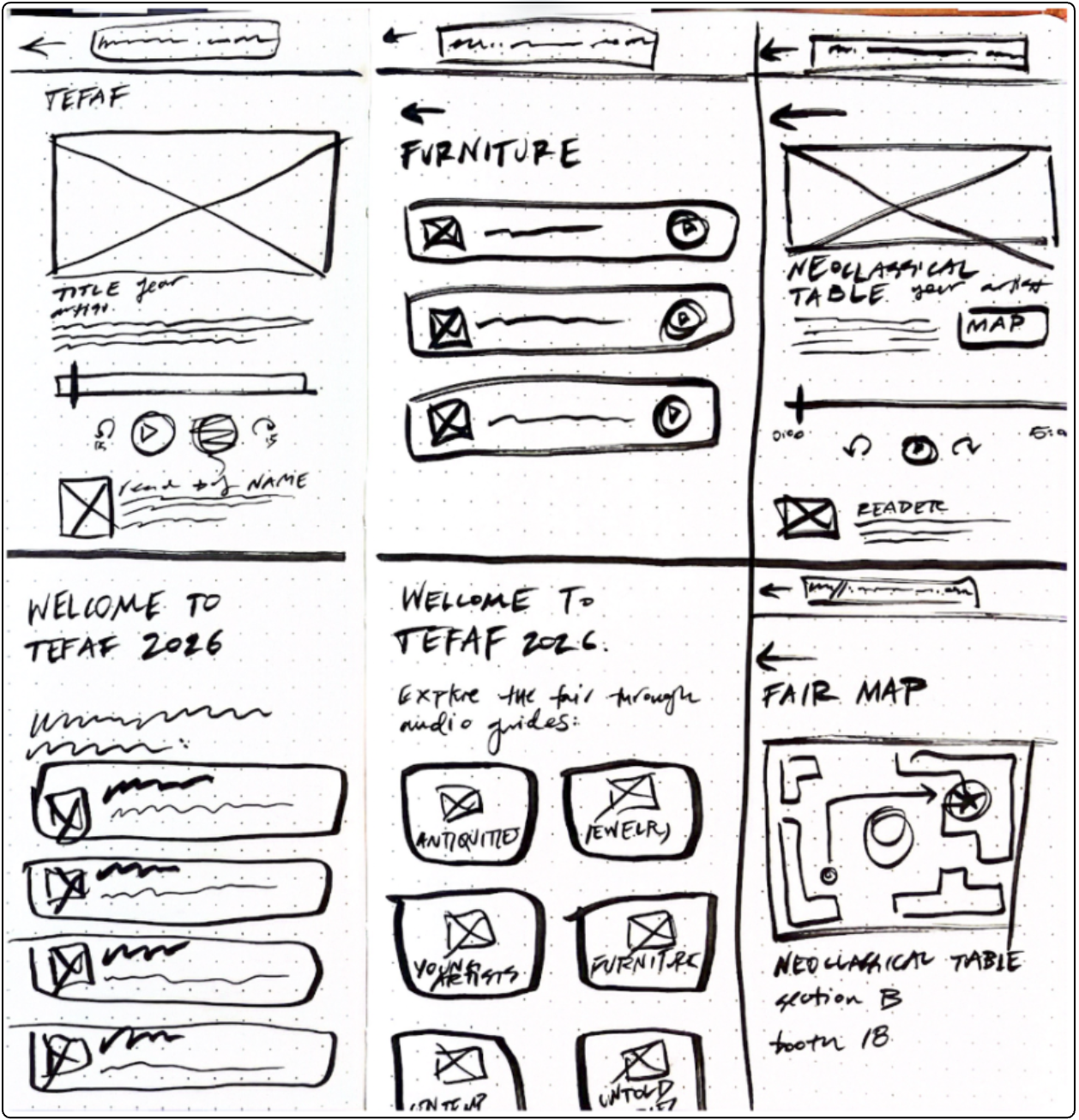
I conducted Crazy 8's to generate ideas for the layout of the audio guide website:
Prototype
The audio guide website allows users to explore the fair by category, see a preview of the works that have guides, and then listen to the audio. In person, works would also have QR codes that attendees could scan to be taken directly to the corresponding guide.