

Spotify’s Recommendation Algorithm
Introduction
Historically praised for its ability to introduce users to new music, Spotify has been disappointing listeners in recent years. Many complain about being stuck in musical echo chambers, and a lack of agency over how Spotify perceives their taste profile. This study aimed to uncover a clear picture of user sentiment towards Spotify’s recommendations, and direction for how Spotify might make improvements.
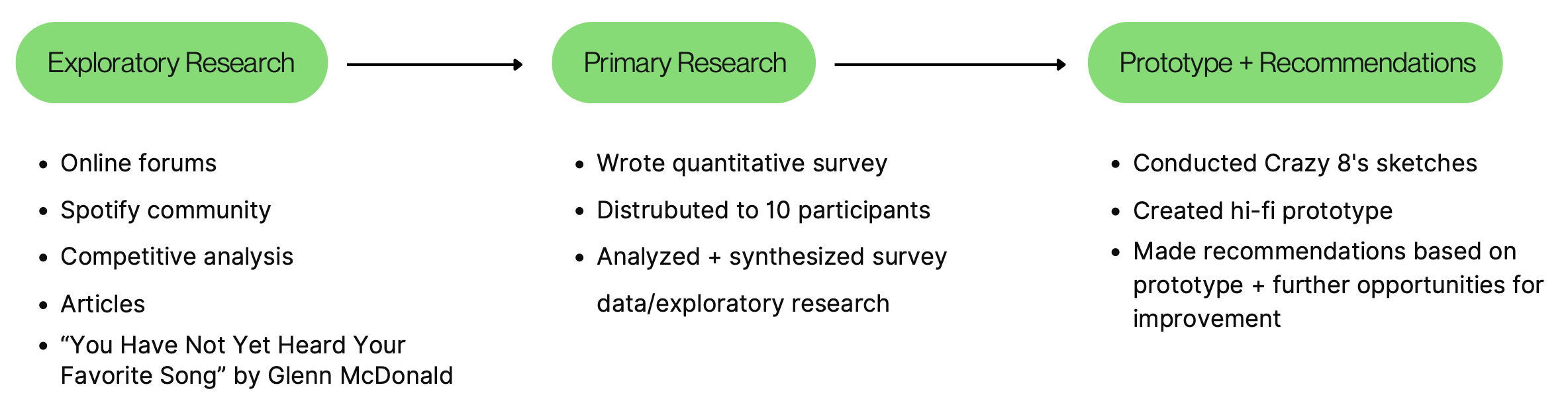
Sprint Plan
How do Spotify’s Algorithms Work?


Collaborative Filtering:
Makes recommendations based on the preferences of users with similar taste profiles.
Content-Based Filtering:
Makes recommendations based on the attributes of a song, such as tempo, danceability, genre, and mood.
Artist Discovery Mode:
A promotional tool where artists (or their teams) can opt to earn a lower royalty rate on certain songs in exchange for increased exposure in algorithm-driven listening sessions.
Example:
User A + B like Dua Lipa. User A added a Sabrina Carpenter song to their playlist. Spotify recommends that song to User B.
Example:
A user makes a Song Radio based on “Call Me Maybe.” Spotify populates the playlist with similarly danceable, upbeat, pop songs.
Example:
Tate McRae’s team enables Discovery Mode for “Sports Car.” The track is now more likely to appear in personalized playlists or radio sessions of users whose listening behavior aligns with that song’s style.
Survey
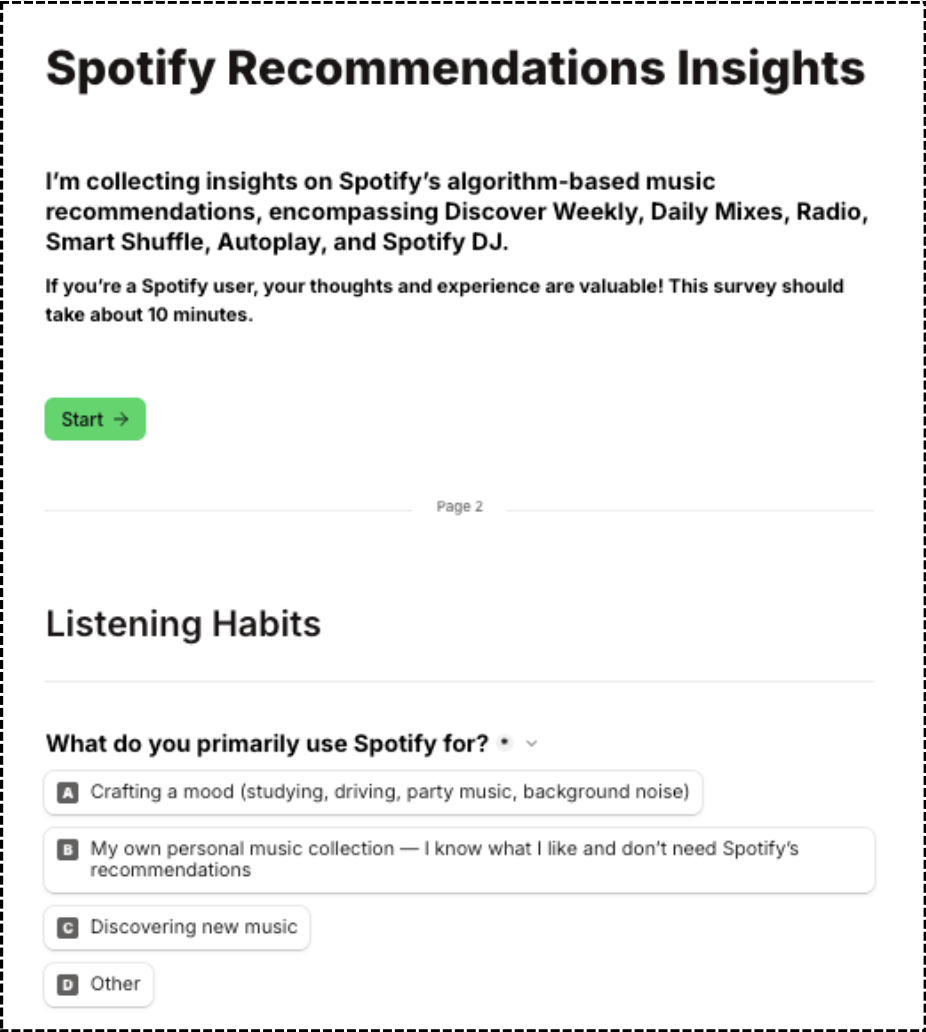
To learn more about user sentiment towards the recommendations provided by Spotify’s various algorithms, I conducted a survey.
6 respondents
11 questions
Multiple choice and short answer
Results + Associated Pain Points
Collaborative Filtering
Popularity bias
Limited novelty
“I feel like I’m just listening to all the same s*** no matter what artist or radio I select.”
Content-Based Filtering
Overemphasis on surface level features
Limited novelty
“I wish song radio would play songs matching the same energy. Not just from that artist or other artists in the genre.”
Artist Discovery Mode
A sense that you’re being marketed to
“Today, I opened my Spotify and my homepage offered me Zach Bryan and Kesha, two artists that have nothing to do with me.”
“I don’t like normal music. Stop trying to show me normal music.”
Protoyping a Solution
“The Tuner”
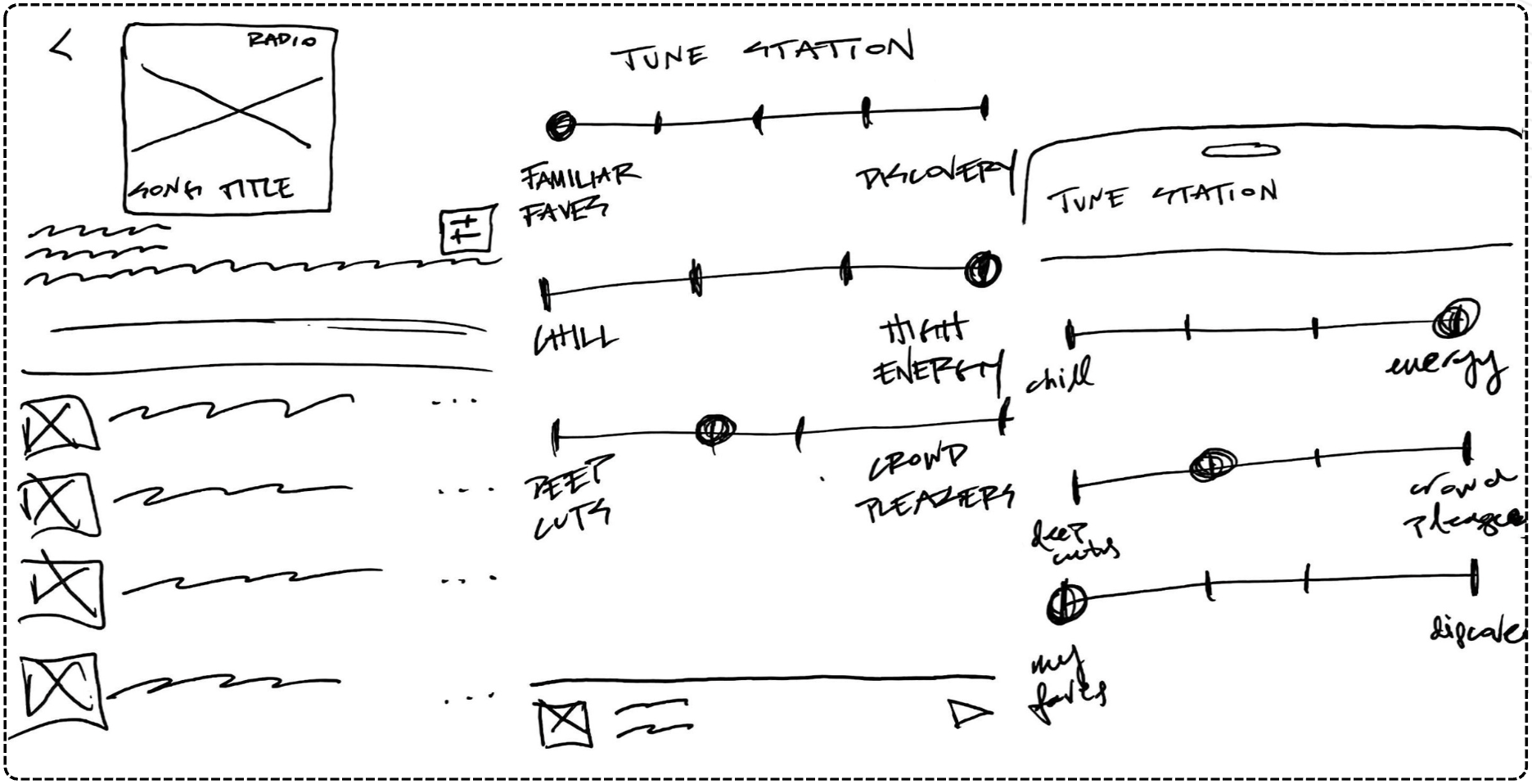
Currently, users have no control over whether they want to stick to what they know, or find something new when using Radio.
Frustrated users frequently cite being shown songs and artists they already know as a strong pain point. However, some users say that this is exactly what they want during a listening session. Adding a slider--going between familiar favorites and discovery--will allow users to have more agency over their music discovery.
Demo
User can select the Tuner button after creating a radio station
The Tuner appears, allowing the user to set how much they want to discover vs stick with their taste profile on this radio
User can further customize the station by sliding between more relaxed and more upbeat songs
Making changes with the Tuner prompts the radio algorithm to adjust accordingly
Outcome: The user feels more in control over the recommendations they receive. The Tuner satisfies both highly curious and discovery-driven users, as well as those seeking familiarity.